


Bismillah Al-Raḥmān Al-Raḥīm; Ṣallā Allahu `alā Sayyadinā Muḥammad wa `alā Ālihi wa Ṣaḥbihi wa Sallam — In the Name of God, Most Merciful and Compassionate; God’s Blessings and Peace be upon our Master, Muḥammad, and on his Family and Companions.
I have been reflecting on the events and challenges that have occurred this past year, whether they were personal, communal, or societal. The reality of success, pain, failures, losses, setbacks, and second chances is even more profound given the urgency and gravity of the challenges the world faces.
Whether it is from the mental and spiritual anguish we have experienced because of the slaughter and genocide we have seen carried out in Palestine, the Sudan, Myanmar, or the Congo. Or in witnessing or being a victim of the oppression, injustices, and destruction of the facade of justice and law in the US, people are suffering on a level that is comparatively worse than the pre-1960s civil rights era.
One of the more profoundly bittersweet and at times, painful realities for me was closing the chapter on my time in service to the Tayba Foundation. I first connected with Tayba in February 2013, after struggling to find reliable, traditional Muslim scholarship during my time in federal prison.
By Allah’s Faḍl (grace) and Raḥma (mercy), by connecting with Tayba, I was able to learn my Farḍ al-`Ayn (individual obligations) concerning my practice & beliefs of the Dīn, connect with scholars, write and edit textbooks, design curricula, syllabi, and assessments. But most of all, I was deeply immersed in khidma (service) to Muslims in need, through my teaching, counseling, and mentoring, as well as to the rest of Allah’s creation.
Also, during my time at Tayba, through my work and continued study with different scholars and institutions, I was able to refine my vision of Umma International and sharpen my thinking about what it means to be a person who is committed to service and attending to the needs of the Umma of Prophet Muḥammad ﷺ. As I shared in my last post, all of this helped me develop and codify the Khidma Leadership Framework.
In reflecting further on Khidma and leadership in the American Muslim communities across the country, we lost five amazing, dedicated, and highly impactful servant leaders in the last few months of this year. All of them were committed to service, and they each served Muslims and the broader society in word and deed.
Chief among them for me was Imām Jamil Abdullah Al-Amin (H. Rap Brown)1. My late father (may Allah have mercy on him and forgive his sins) and the Imām were friends, and I knew him in my youth. Imām Jamil’s commitment to serving his community, calling others to Islam, and standing firm in the face of oppression and injustice should enlighten and inspire us all. His unjust incarceration and mistreatment, which was a major contributor to his recent death, should never be forgotten, and as a community, we must never forget nor should we be indifferent to his legacy and the needs of the communities he served.
Another person we lost recently, whom I knew and engaged with, albeit briefly, was Dr. M. Yaqub Mirza. I encountered Dr. Mirza during my time in my master’s program, whether through guest seminars or in more intimate settings where he would share advice, answer our questions, or encourage us to apply to a fully funded doctorate at George Mason, where he previously served as a trustee of the George Mason University Foundation. His work in pioneering the Islamic Finance industry in this country, co-founding IIIT, and other institutions was truly meaningful and impactful for all Muslims.
Imām Al-Hajj Talib Abdur-Rashid, through his leadership and work as a leader of the Mosque of Islamic Brotherhood, was a staunch advocate for the oppressed and downtrodden among us. He also stood up for the advocacy of people with HIV/AIDS and did a lot to raise awareness on the issues surrounding living with these illnesses. He succeeded Shaykh `Allama Al-Hajj K. Ahmad Tawfiq, who was the successor of our beloved Imām El Hajj Malik El Shabazz (Malcolm X). Although I did not know the Imām, I saw him take a firm stand against injustice and oppression, and everyone I know who knew him loved him.
Another beautiful soul I never had a chance to meet and only learned of him and his impact after his passing was Brother Umar Hakim-Dey. His journey from being in a gang, then leaving it, to later finding Islam and becoming a monumental force for good throughout Southern California shows how he transcended obstacles and stood for something despite the odds or challenges. He was lovingly remembered for advising people to “don’t leave your post,” encouraging steadfastness and resilience in the service of others.
The last beautiful soul that we lost was the Father of my teacher throughout my master’s program, Shaykh Dr. Yasir Qadhi, Dr. Mazhar Kazi. Dr. Kazi was a key and influential force for Muslims in the Houston area and eventually throughout the US. He was even more impactful through his fathering and nurturing of Shaykh Yasir, setting him on the path to global impact and service.
We ask Allah ﷻ to forgive each of them for their shortcomings and sins, and to grant their families and communities patience, and to enter them all into the highest ranks of Paradise.
The beauty appreciated, and lessons to learn from the lives and works of each of these leaders is that they were people of service. They acted with the conscious awareness of the need to make things available to and easy for people to take part in. They each embodied the principles of the Khidma Leadership Framework, demonstrating that service and sincerity are inseparable.
Imām Jamil demonstrated that true service (khidma) continues to abide even in the face of ongoing oppression, malicious injustice, and intense persecution, measuring success by community and human flourishing rather than personal comfort.
Dr. Mirza showed us that economic systems can be instruments of amāna (sacred trust) when built for collective benefit and that Shurā (mutual consultation) supports the integrity of the system and institutions the community builds.
Imām Talib proved that institutional leadership requires Shurā and bridge-building across differences, and that advocacy and justice are inherited legacies that shape and define our contributions, proving that our consultation must be guided by revelation and in support of human flourishing.
Brother Umar taught us that Iḥsān (excellence) in service means treating every person with dignity, never abandoning our posts, and that our past mistakes can be the most significant source of our motivation in serving others.
Dr. Kazi exemplified how quiet khidma compounds across generations and how fostering righteousness and stability in the home opens the door for our children to be a source of ṣadaqa jārīya (continuous ongoing charity) all for the benefit of the community and society at large (maṣlaḥa)
All of them were the true personifications of upholding the amana of Allah ﷻ and His Rasūl ﷺ.
They manifested iḥsān through their selfless characters and deliberately intense foci, which indicated an alignment of their efforts with the Divine Will, are two key elements of their legacy that I wish to highlight because this is what we have to inculcate and embody going into the new year if we plan on being effective in doing the work and being successful in carrying out the vision each of us holds for our own service and da`wa. All while seeking the constant enablement of Allah’s tawfīq (Divine Facilitation to do good).
Allah ﷻ and His Rasūl ﷺ have said,
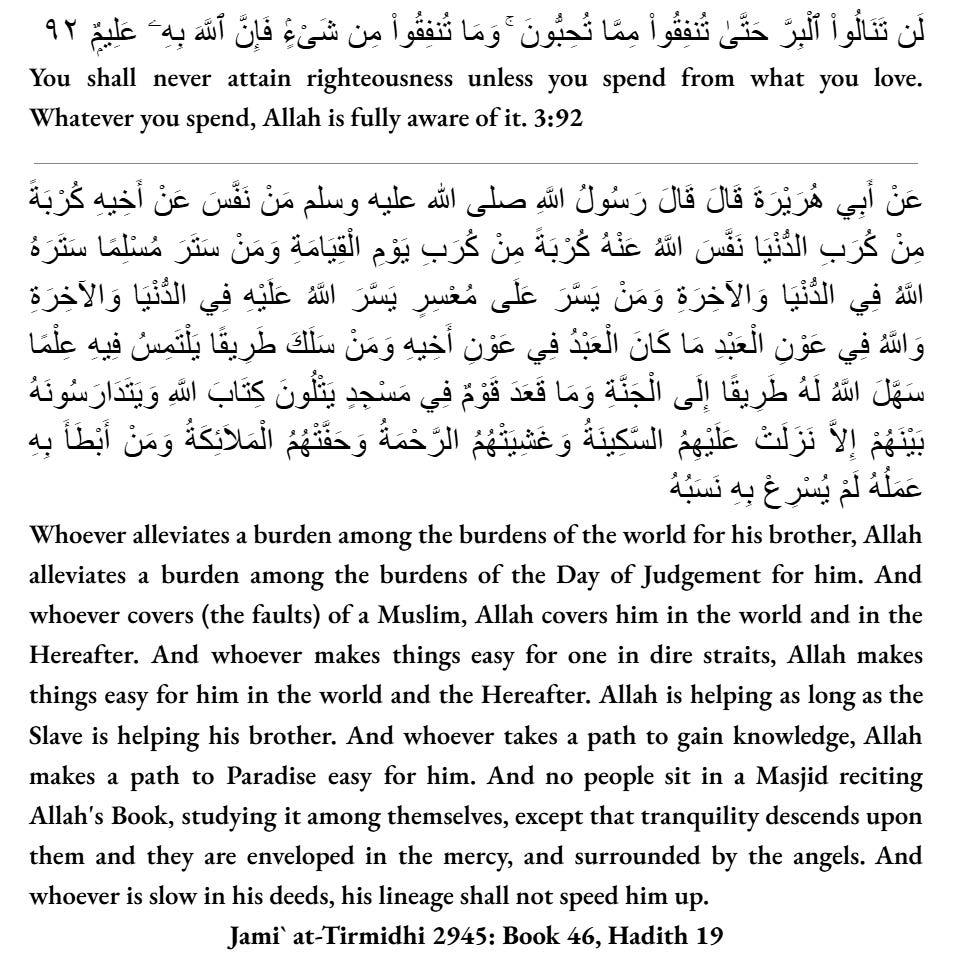
The lives of each of the men have been witnessed, and the reality of their reward is with Allah. They each gave of their most precious possessions, their lives, wealth, and time. We can testify that they served their fellow man, relieved the hardships and suffering of others, and they were people attached to the Dīn in spirit, word, and deeds, and we pray for them to have a splendid accounting with their Lord ﷻ.
So, my question to you as we prepare to welcome 2026, will their examples compel us to ask ourselves, ‘Are we willing and capable of doing what they did?’ ‘Are we ready to serve with sacrifice, build with vision, and resist injustice & oppression with principles and purpose? Or are we going to cast aside the Divine Mandate and do nothing? Allah Ta`ālā repeatedly asks the question in Sūra, Al-Raḥmān, “Which of the favors of your Lord will you deny?”
My effort to contribute to the legacy of these men is found in the Khidma Leadership Framework, where I codify six principles for aligning values with practice in all spheres of life where leadership is essential, particularly in organizations and institutions.
If you are in Chicago this coming week for the MASCON 2025, let’s connect, InShā’Allah.
The security certificate for this website seems to have expired, but the website is safe; I would not share it otherwise.